Scrubber-dryer
ROK Pro
The all-rounder that cleans to the edge and looks after itself.
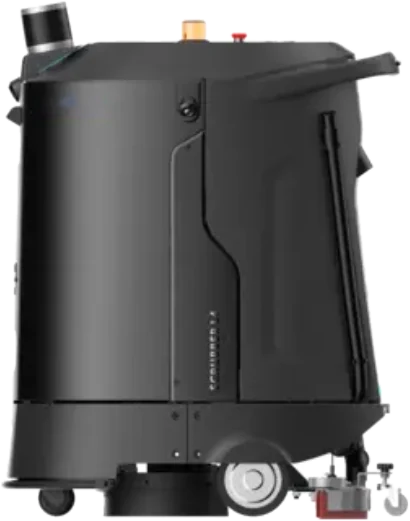
Our all-rounder for supermarkets, hotels, hospitals and schools. It scrubs and dries in one pass, cleans close to walls, spots stains and uses a 4-in-1 station to charge, refill, drain and top up detergent.
What it does
Why sites choose the ROK Pro.
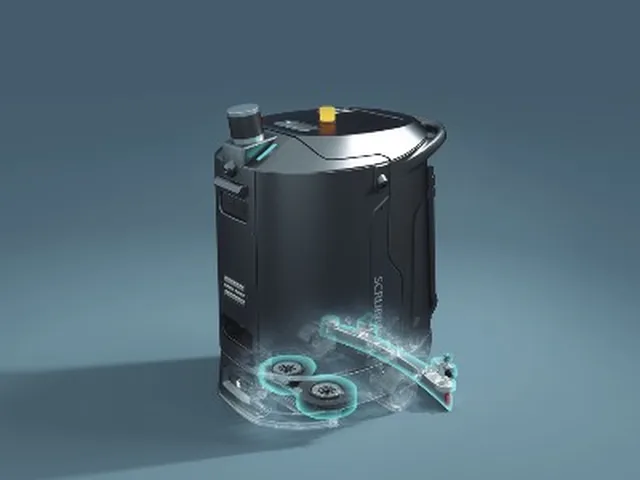
Edge cleaning
Cleans close along walls, fixtures and shelving, not just the open floor.
Stain detection
AI perception spots stains on the floor so they get the attention they need.
4-in-1 workstation
Charges the robot, refills clean water, drains dirty water and tops up detergent automatically.
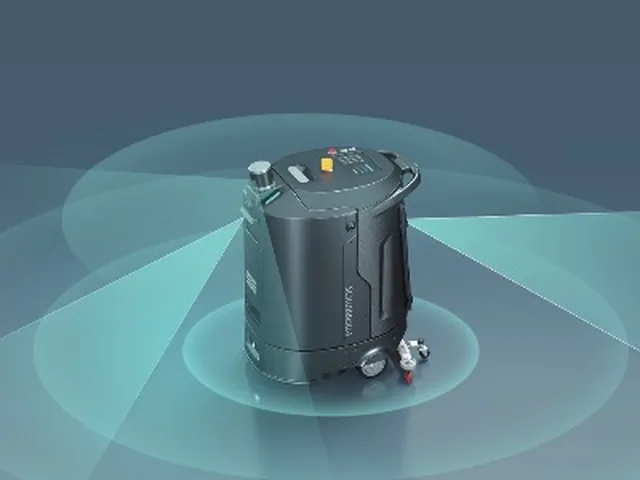
LiDAR plus depth cameras
32-beam 3D LiDAR with a 150 m range, backed up by 3D depth cameras and bumper sensors.
Safe in busy spaces
Detects people, trolleys and obstacles, then slows, stops or routes around them.
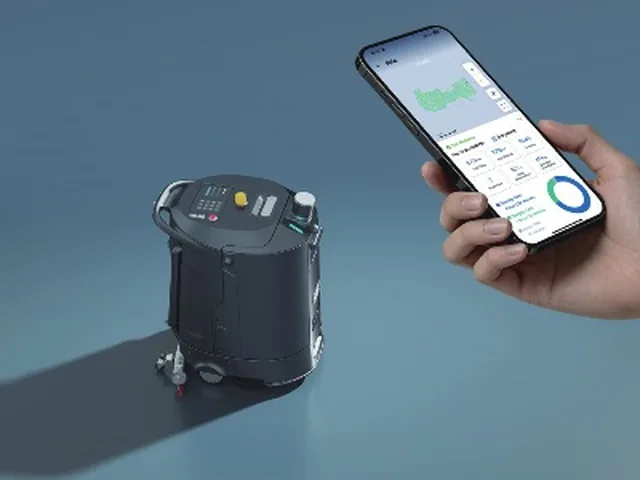
A report for every run
Coverage maps and cleaning reports land in the app after each clean.
Specifications
The full spec sheet.
- Type
- Autonomous scrubber-dryer
- Cleaning width
- 450 mm
- Clean-water tank
- 38 L
- Max coverage
- 2,268 m²/h
- Size (L × W × H)
- 810 × 615 × 1,075 mm
- Recovery tank
- 36 L
- Runtime
- Up to 4.5 h
- Charge time
- 2.5 h
- Min. doorway
- 810 mm
- Weight
- 150 kg
- Sensors
- 32-beam 3D LiDAR (150 m), 3D depth cameras, bumper sensors
- Smart features
- Edge cleaning, stain detection
- Docking
- 4-in-1 workstation: charge, refill, drain, detergent
- Best for
- Hotels, hospitals, retail, education
Coverage figures are maximum rated rates. Real-world performance depends on your floor layout, and we'll model it for your building.
Questions
ROK Pro questions.
Something else you want to know? Ask Tess in the chat or book a demo.
What does the ROK Pro's 4-in-1 station do?
It charges the robot, refills clean water, drains dirty water and tops up detergent, so the robot can run day after day with very little staff time.
Can the ROK Pro clean close to walls and shelving?
Yes. Edge cleaning lets it work close along walls, fixtures and shelving.
Is the ROK Pro safe in a busy store or hospital?
It uses 3D LiDAR, depth cameras and bumper sensors to detect people and obstacles, and slows down, stops or routes around them.
The rest of the fleet
